Free Cash, Capital Accumulation and Inequality by Craig Allan Medlen
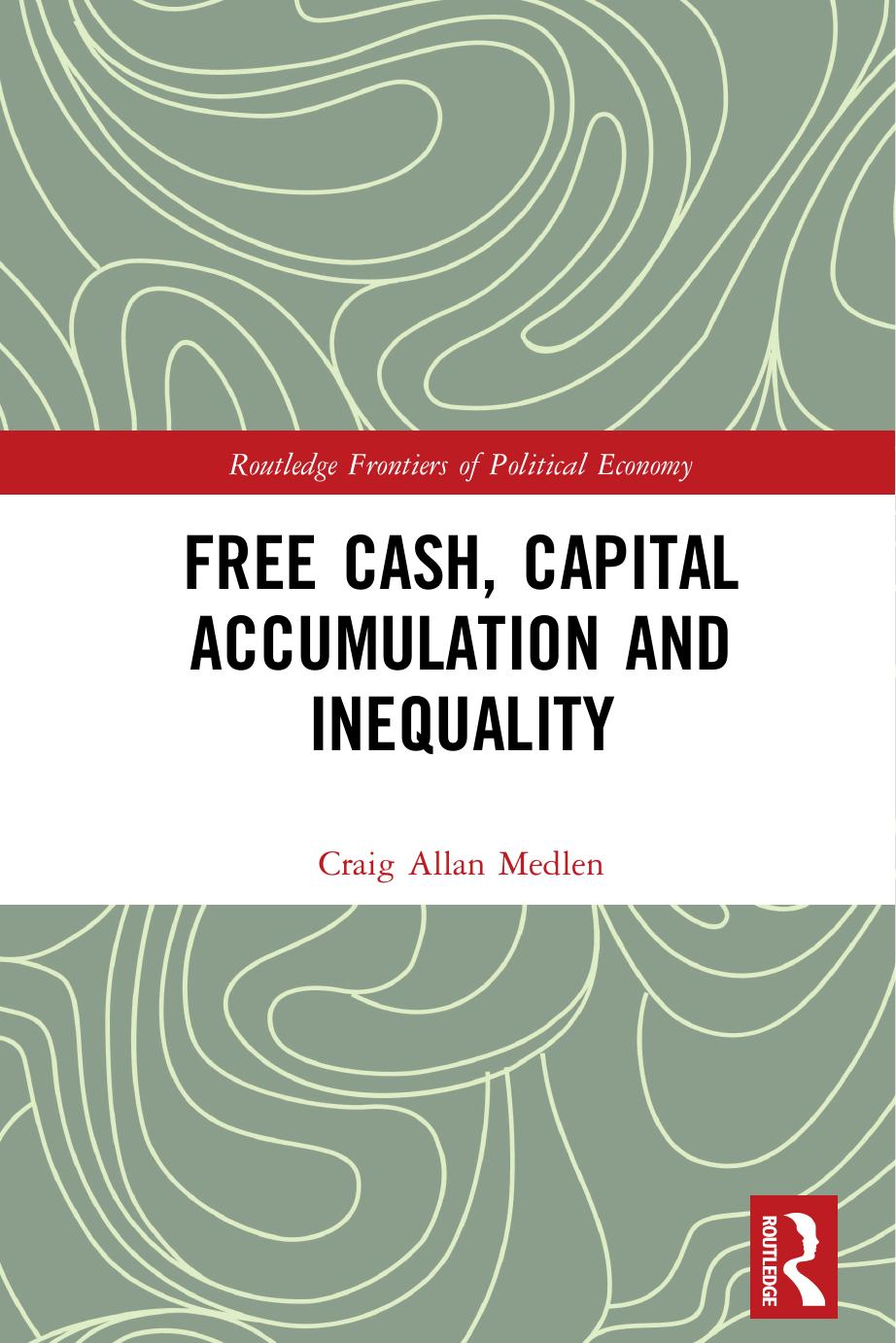
Author:Craig Allan Medlen [Неизв.]
Language: eng
Format: epub, pdf
Publisher: Taylor & Francis (CAM)
Published: 2018-08-16T20:00:00+00:00
Stagnation and stimulants
Under the optics of the oligopoly-stagnation thesis, an explanation of any protracted slowdownâlike the slowdown since the late 1960sâinevitably deals with the weakening of various stimulants and the exhaustion of various counter-acting forces. Below I focus on three factors: (1) the reduction of taxes on the rich; (2) the extension of the two-earner household, and (3) the rise of household debt.
High taxes on the rich countered stagnation because they aimed at high-saving individuals and corporations whose spending propensities on investment were problematic at best and low at worst. The decline of high taxes on the rich eventually led to higher and higher government deficits, a corresponding rise in free cash and the speculative endeavors associated with free cash.
The extension of the two-earner household raised household incomes and, together with a rise of household debt, allowed markets to expand. Such debt stimulation, however, expanded the level of risk and consequently bumped up against inherent limits.
Before discussing the rising deficits of government and households, I first construct a model of free cash generation that expands upon Kaleckiâs original formulation. Free cash is generated not just by government deficits but by the deficits of households as well. This free cash model allows us to understand how debt stimulants countering stagnation have been intimately intertwined with the growth of speculative free cash.
Download
Free Cash, Capital Accumulation and Inequality by Craig Allan Medlen.pdf
This site does not store any files on its server. We only index and link to content provided by other sites. Please contact the content providers to delete copyright contents if any and email us, we'll remove relevant links or contents immediately.
International Integration of the Brazilian Economy by Elias C. Grivoyannis(111078)
The Radium Girls by Kate Moore(12036)
Turbulence by E. J. Noyes(8057)
Nudge - Improving Decisions about Health, Wealth, and Happiness by Thaler Sunstein(7712)
The Black Swan by Nassim Nicholas Taleb(7137)
Rich Dad Poor Dad by Robert T. Kiyosaki(6646)
Pioneering Portfolio Management by David F. Swensen(6305)
Man-made Catastrophes and Risk Information Concealment by Dmitry Chernov & Didier Sornette(6029)
Zero to One by Peter Thiel(5808)
Secrecy World by Jake Bernstein(4756)
Millionaire: The Philanderer, Gambler, and Duelist Who Invented Modern Finance by Janet Gleeson(4482)
The Age of Surveillance Capitalism by Shoshana Zuboff(4310)
Skin in the Game by Nassim Nicholas Taleb(4257)
The Money Culture by Michael Lewis(4212)
Bullshit Jobs by David Graeber(4197)
Skin in the Game: Hidden Asymmetries in Daily Life by Nassim Nicholas Taleb(4012)
The Dhandho Investor by Mohnish Pabrai(3775)
The Wisdom of Finance by Mihir Desai(3754)
Blockchain Basics by Daniel Drescher(3586)
